




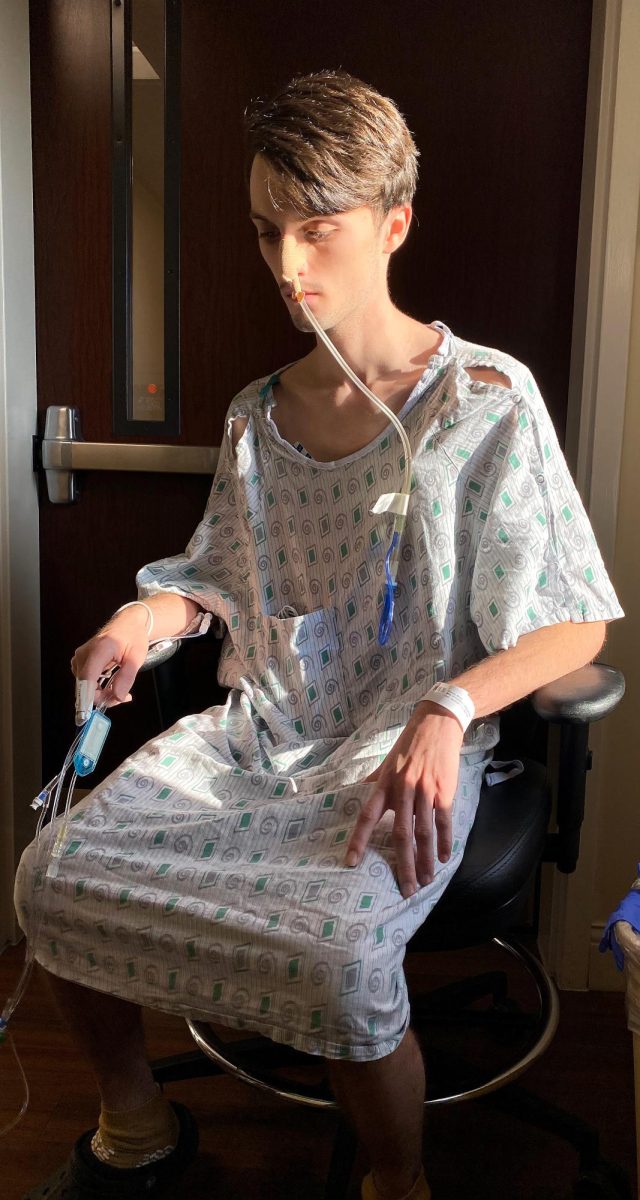








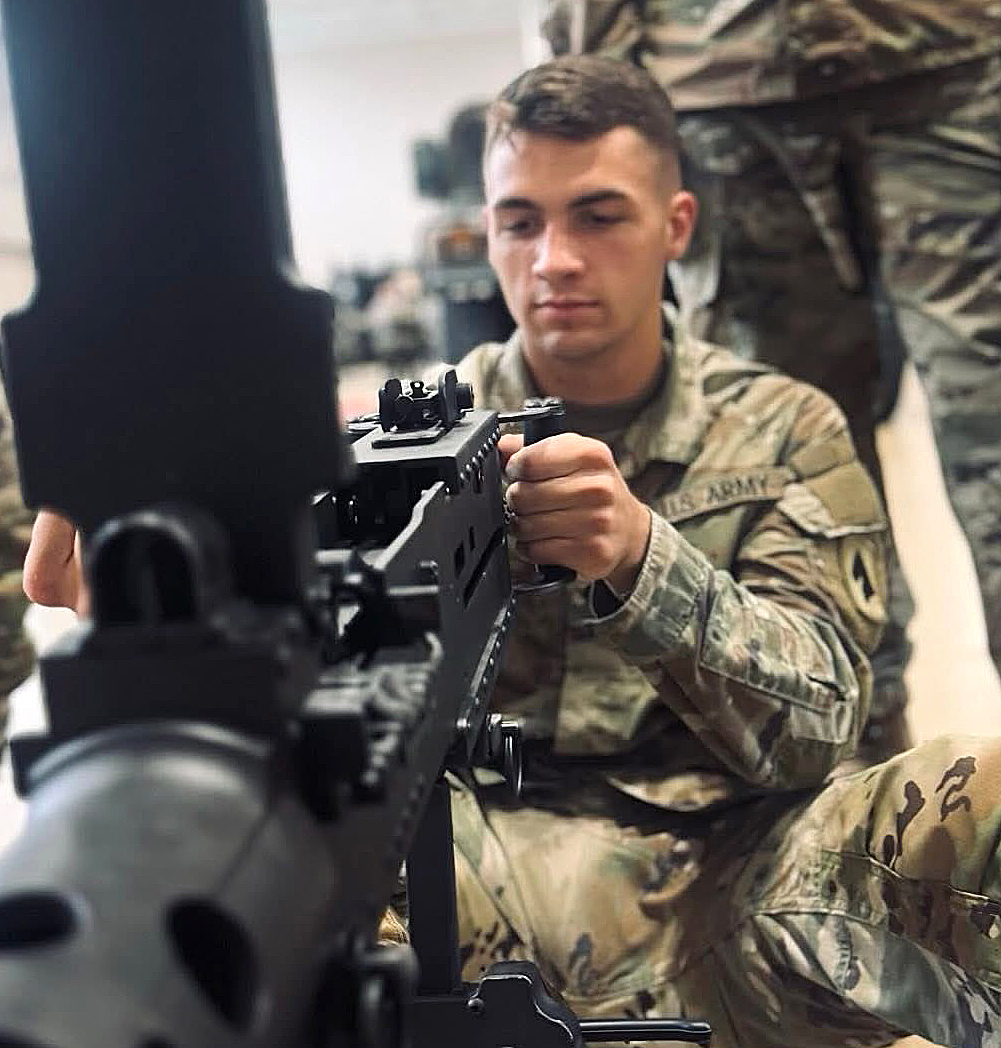


During his senior year of high school, Jay Sipes knew he wanted to attend college but didn’t have the financial means.
After learning the Kentucky Army National Guard would help pay for college, a 17-year-old Sipes and a friend made a spur-of-the-moment decision to enlist. Sipes is set to graduate from CU in May with a bachelor’s degree in pastoral ministry.
Sipes said balancing Army duty and college has been manageable because of supportive leadership.
“Being in the National Guard is actually quite easy being a student,” said Sipes. “First of all, they really care about your education. So, if there’s any conflict of dates between your education or training, they’re very lenient on education. Vice versa the education system is very lenient on your drill days.”
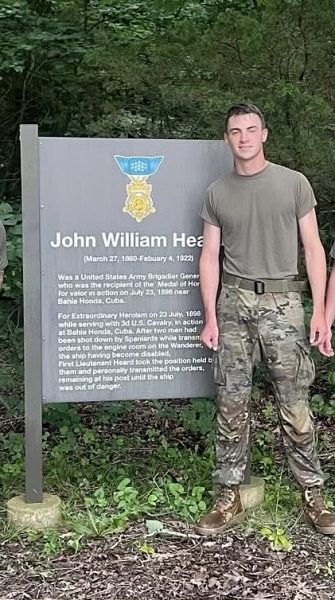
Sipes also said laws were in place to allow students in the National Guard to miss class without penalty if need be.
According to the official National Guard website, the National Guard provides more than 130 career opportunities. For Sipes, that role is as an 88 Mike, or 88M, a motor transport operator.
“Basically, I drive all the big trucks that the Army has,” said Sipes. “I had training for that for about eight weeks…then I came back here and had more specified training on the trucks that we have at our armory in Campbellsville.”
According to Sipes, the National Guard is state-funded and has a primary duty to the state of Kentucky.
“Our duty is first to the state,” said Sipes, “and so we defend the people of the state and help with national disasters. But then we also respond on a federal level to deployments.”
Sipes said the biggest surprise has been the camaraderie he’s built with his fellow soldiers.
“I love my buddies in the National Guard,” said Sipes. “They’re some of my closest friends. You got to do life together through tough situations. There are a lot of similarities between people in the National Guard. A lot of their stories are the same. A lot of the reasons they’re joining are the same.”
Sipes said if he had to go into conflict, it would be worth it for him to protect those he loves.
“I know deep down, if I am deployed, it’s because I’m defending my country,” he said. “I’m defending the people I love. I’m defending my family. And so, if that’s what it takes for my family to be safe, then I’m OK with that.”
Citing the ongoing conflict with Iran, Sipes said he doesn’t know all of the logistics of the war, but he is ready to fight to protect his country if need be.
“If there is a time that I need to go to defend my country, then I’m okay with that,” Sipes said. “That’s something that you’re told as you join the National Guard. That is a possibility.”
Sipes said those who join should take full advantage of the Guard’s benefits.
“They’ll pay for your EMS training, your firefighter training, your welding training. They’ll pay for any of that,” said Sipes, “so if you’re gonna join, use the benefits that you get because that is what makes it worth it.”
While the National Guard was right for Sipes, he said that people interested shouldn’t without genuine interest or commitment.
“Make sure it’s something that you are interested in, something that you’re willing to do because it is a big commitment,” Sipes said. “It’s a six-year contract. And when you’re like 17, 18 years old, six years is a long time.”
Sipes said prospective members should talk to people currently in the National Guard about their experience before determining if it’s right for them.
“The recruiter is gonna try to sell you on anything,” Sipes said. “I love the recruiters, but talk to somebody. Talk to somebody you know is gonna tell you the truth first and then talk to a recruiter about it.”
Ashley Vandiver is a sophomore at Campbellsville who is currently going through the process of joining the National Guard as a public affairs mass communication specialist. She described the role as similar to journalism work.
“You go where the action is and take photos and just like help with like the public relations type scenarios that come along with the Army, specifically the National Guard,” Vandiver said.
Vandiver said she first talked with a recruiter two months ago, and it sounded perfect to her.
“It’s something my parents and brother are struggling to see me actually do,” said Vandiver. “But the way that I view it is after lots of research and thinking about it and even praying about it, I feel like it’s what I’m being called to do. It’s going to help with a lot of various things, such as paying for school. It’ll get me medical insurance, housing. It has a bunch of other benefits.”
Vandiver’s biggest challenge to joining is a long list of medical requirements.
“It’s really a big question of will they even let me enlist,” Vandiver said. “That’s something that me and my recruiter have gone back and forth with a lot, and so we’re kind of just going to play it by ear and see what they say about it.”
While Vandiver was concerned about the prospect of being deployed, the recruiter alleviated her concerns by saying that she would likely never be deployed overseas in her position.
“I’m more likely to just be deployed here in the state for like different relief type things like if there is a natural disaster or something like that,” Vandiver said.