

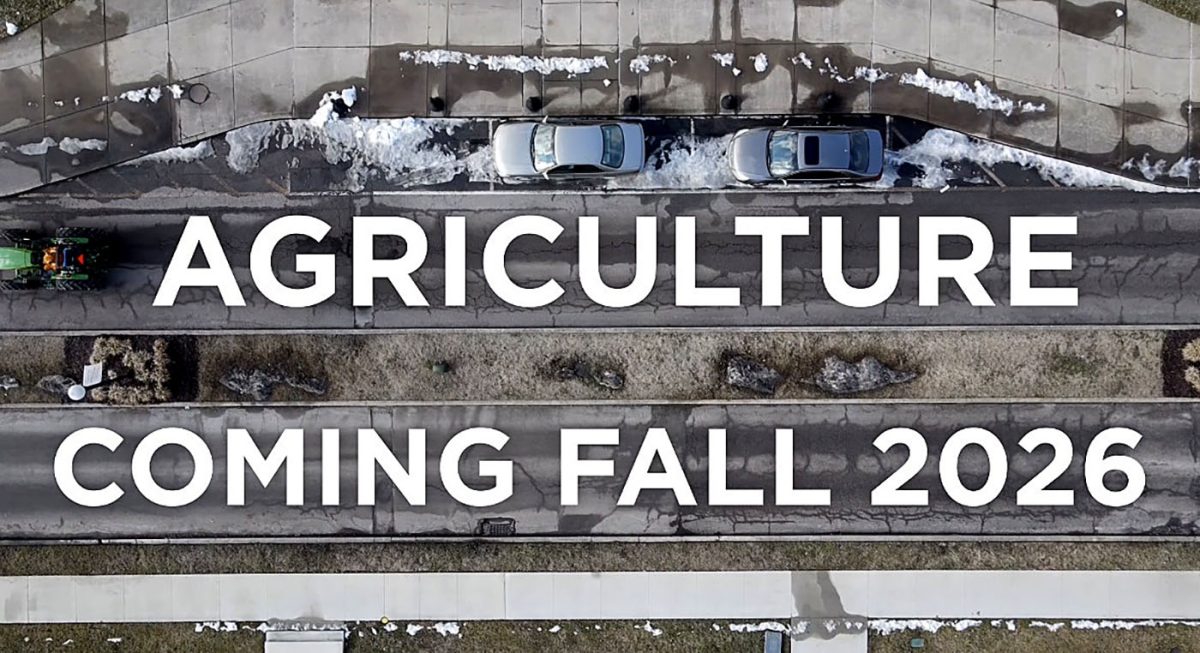















Campbellsville University is expanding its academic horizons by launching bachelor’s and associate degrees in general agriculture this fall, giving students the chance to turn a passion for the land into a promising career.
The agriculture program at CU will offer a comprehensive curriculum designed to build student expertise in agriculture systems, production practices and critical thinking skills. The program will also provide hands-on experience with local businesses and farms.
Dr. Samantha Gaddie, a Green County High School agriculture teacher, will serve as the university’s director of agriculture. Before launching the program, Gaddie said she sought insight from educators, community members and industry professionals to ensure the curriculum met real-world demands.

“I’ve talked to different teachers, I’ve talked to our local extension agents, I’ve talked to ag producers and people that have ag businesses and I kind of asked them what knowledge pieces they thought were most important,” Gaddie said. “The overwhelming response was that students needed business and marketing skills to either run a farm or an ag business. They also said animal nutrition was needed for students who plan to pursue a graduate or veterinary science degree. I had a lot of people giving opinions and insights from an industry standpoint.”
That feedback shaped the program’s curriculum, which now includes coursework in agribusiness, marketing and communications and core agriculture studies. A degree in agriculture opens doors to a range of careers, from agribusiness manager to research analyst.
Gaddie said one of her biggest motivators was keeping local talent close to home. Before CU introduced the program, students in the area who wanted to major in agriculture had no nearby options.
“I made a map, and it shows where all the other colleges are located with ag programs, and it shows how Campbellsville is not really close to any of those colleges,” Gaddie said. “Students from this area are having to move to go to college for ag and a lot of them don’t want to move that far, they end up not majoring in it. To me, that has been a big motivator, to keep the locally talented students local.”
The program is already exploring partnerships before its fall 2026 launch. Gaddie said she has had early conversations with a local high school about potentially offering lab space and dual credit opportunities for students, though nothing had been finalized yet.
“They are investing in us with hopes that eventually we’re going to give them some new hires,” Gaddie said. “We’re going to work with them to help students get credit for those classes so they can go ahead and earn some college credit,” she said. “I think we will have a lot of updates by August.”
While Taylor County is a rural area and the program was built with rural communities in mind, CU’s student body is made up of nearly half international students. Gaddie said the program is designed to serve both populations.
“It’s built upon a lot of different agricultural skills,” she said. “We’re hoping students can pick up education pieces and start making connections and building their network right away.”
That global perspective is also woven into the curriculum. Gaddie said the program will go beyond regional agriculture to explore the history of farming and different climates around the world.
“We’ll look at regional agriculture around the globe and how places are different,” she said. “I think people take it for granted that the United States is perfectly situated for agriculture. We’ve got fairly flat landscapes, and not all places like that.”
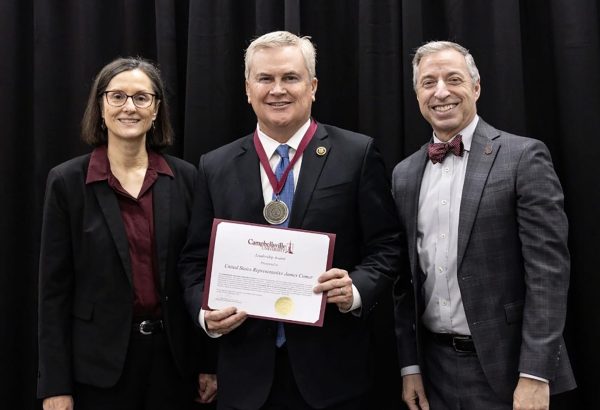
While the agriculture program had been building momentum, CU has also recently received a financial boost. Congressman James Comer presented the university with a $3 million federal grant designated for a new School of Business building. Dr. Monica Hardin, assistant vice president for academic affairs, said that broader institutional funding like this can still benefit newer programs like agriculture by freeing up resources for students.
“Having help with finance that get us off to a solid start and also having structural funding does often allow us to offer more students scholarships,” Hardin said. “This makes it more accessible to more students and so those types of funds are incredibly helpful.”
Hardin said CU’s smaller size compared to schools like the University of Kentucky and Murray State University, which have traditionally been among the few Kentucky institutions offering agriculture degrees, could actually be an advantage for students.
“Being far away from home is not something students enjoy,” she said. “As we’re a smaller campus, we’re not a UK or Murray State that’s harder to navigate, so we hope that it’s a little more accessible to people who might not want that bigger environment.”
Looking ahead, university leaders say the agriculture program is just the beginning. Dr. Jeanette Parker, provost and vice president for academic affairs, said she hopes the program will grow into something that serves students well beyond graduation.
“I hope we continue to grow this program and that there will be opportunities for people to come back for certificates or update their training, because sometimes we don’t think about agriculture as being an evolving program,” Parker said. “There’s some vision for additional programs; we want what we can manage and do well and then I think we’ll continue to grow as the program builds.”